Welcome to Peristomal Skin Health Resource Centre
This resource will provide comprehensive information, practical tools, and supporting materials to help you understand skin health, recognise and manage common conditions, optimise stoma care and fit, and access guidance for both immediate and long-term patient support.

Why Skin Health Matters
Explore the evidence in this section to inform clinical decision-making and support targeted interventions that improve long-term patient outcomes.
Peristomal skin health is a key factor in successful rehabilitation following total laryngectomy. Intact skin supports reliable adhesive wear, consistent HME use, and effective tracheoesophageal voicing. When skin integrity is compromised, early seal failure, reduced humidification, and increased voicing effort are more likely, which can affect pulmonary stability and device adherence over time. Clinical evidence demonstrates a clear relationship between peristomal skin condition, respiratory function, and communication outcomes.
Understanding Peristomal Skin
This section provides a structured overview of skin anatomy and stress points to support early identification of risk, informed product selection, and safer adhesive techniques.
Effective management of peristomal skin begins with an understanding of skin structure and function. Each layer of skin responds differently to adhesive wear, moisture, friction, and shear, and injury patterns vary depending on where disruption occurs. Recognising how the epidermis, dermo-epidermal junction, dermis, and underlying tissue behave under stress helps explain why certain complications develop and why similar adhesives may perform differently between patients or over time.
download resources

Why Skin Breaks Down
This section outlines the key drivers of peristomal skin breakdown and highlights common patterns where overlapping factors accelerate progression from mild irritation to more significant injury.
Peristomal skin breakdown rarely results from a single cause. In most cases, deterioration occurs when mechanical stress, moisture, and repeated adhesive use interact with underlying patient-related vulnerabilities, exceeding the skin’s capacity to recover between wear cycles. Understanding how intrinsic factors (such as comorbidities, age, or tissue quality) combine with extrinsic influences (including moisture exposure, cleansing practices, and adhesive techniques) is essential for identifying risk early.
download resourcesProtecting the Skin
This section focuses on maintaining skin integrity, achieving reliable adhesion, and enhancing long-term comfort through consistent self-care.
Preventing peristomal skin injury relies on consistent, low-trauma routine care rather than reactive treatment once damage is visible. Clinicians play a key role in supporting patients to protect the skin during repeated adhesive use, where cumulative mechanical, chemical, and moisture-related stress can compromise barrier function over time. These resources can be used to educate patients on daily skin protection, including safe adhesive removal, appropriate cleansing, and barrier protection.
Learn more
Adhesive Choice
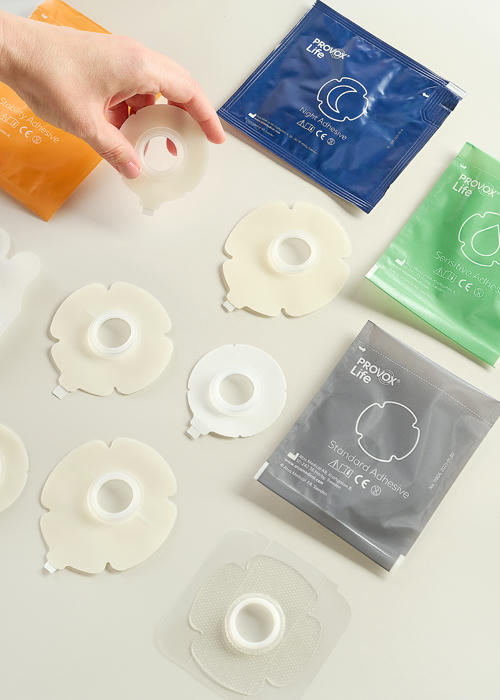
Adhesive selection plays a central role in both skin protection and functional performance in peristomal care. Different adhesive materials respond in distinct ways to moisture, movement, dwell time, and removal forces, influencing seal reliability, wear time, and the risk of medical adhesive-related skin injury (MARSI). Understanding the key material properties of commonly used adhesives supports informed matching of adhesive type to skin condition, anatomical demands, and communication needs.
Download our Adhesive GuideLearning and Support


Patient referral
Our Atos Care Nursing team will always work closely with you and the multidisciplinary team to ensure your patient receives safe, effective, and joined-up care.
When referring a patient to the Nurse service, please provide as much information as possible:
Phone: 0800 783 1659, option 2
Email: atos.nursereferral@nhs.net


Clinical support and education
The Atos Clinical Education team provides support and collaboration on clinical training for laryngectomy and tracheostomy care, grounded in evidence-based practice and suitable for all levels, from beginner to advanced. Our clinical educators offer a variety of training options, including one-to-one clinical support, webinars, Engage and Learn sessions, and bespoke in-house training.


Joint clinic support from Atos nurse team
Our clinical training sessions are flexible and can be tailored to suit your or your colleagues’ level of experience, understanding, and availability. You can choose how and where to receive your training, whether in a hospital, at an external venue, or online - making it as convenient as possible.